

Suppose you’re even a casual fan of the UFO / UAP paradigm. In that case, your views might have been influenced by a fellow whose name you may not know but whose legacy still haunts the study of UFOs to this day. I first read some of his works a few scant years after high school. I’d been enough of a fan of paranormal phenomena — and unidentified flying objects in particular — that his words rang with an almost subliminal familiarity, a resounding “truthiness” that could neither be fully defined or outright ignored.
Suppose you’ve seen the Men in Black films, heard of something called the “Mothman” of Point Pleasant, West Virginia or watched the Richard Gere film The Mothman Prophecies, or were ever a fan of The X-Files. In that case, you’re definitely familiar with the Hollywood voices who found inspiration from little-known indie journalist and amateur UFO investigator John Alva Keel.
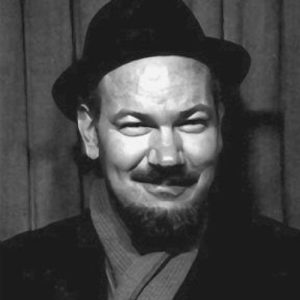 The TL;DR version: John Keel was a largely self-trained illusionist and a well-traveled indie journo. He was fascinated by Forteana and wrote about the strange and the bizarre for any oldie pulp rags willing to sell his obsessively well-researched yarns. Largely unheard of in mainstream circles, he was a reasonably well-known writer in counter-culture circles when he wasn’t writing the occasional TV script. By the late 1960s, he had taken up ufology — the quasi-academic study of UFOs — full-time and had penned more than a few missives for Flying Saucer Review. He popularized the phrase “Men in Black” in his article “UFO Agents of Terror” for the October 1967 issue of the long-defunct Saga magazine.1 He made both the Men in Black and the Mothman of Point Pleasant infamous thanks to his 1975 book The Mothman Prophecies, among other works. A ufologist ahead of his time, Keel — like Project Blue Book astronomers J. Allen Hynek and Jacques Vallée — had abandoned the extraterrestrial hypothesis for UFOs after only one year of investigating the phenomenon. The links he discovered between alleged parapsychological phenomenon, the occult, and UFOs were too great to ignore, as others had done since the onset of the American UFO paradigm in the late 1940s. A solid writer with punchy prose, Keel’s books are as haunting as the spooky happenings he investigated and present his findings and interpretations thereof in a remarkably bold, in-your-face manner. From black-clad creeps to cryptids, Keel had all the paranormal possibilities on lockdown, and all his stories were supposedly real.
THE PROBLEM: Actual physical proof that all his allegedly true tales are factual has been really hard to come by.
DISCLAIMER: Before I continue, while I cannot state with 100% certainty that I believe in paranormal phenomena like UFOs, ghosts, or cryptids, I can say with absolute certainty that I want to believe. My mind is open to extreme possibilities, and as a religious soul, my heart is open to the spiritual and the supernatural. Still, I must follow the physical evidence where it leads. If the physical evidence disproves a story I wish were true, then I must follow the evidence.
Most people who’ve read Keel’s books either believe or don’t believe in the phenomena he writes about. While the believers are interesting people in their own right, I have temporarily adopt the perspective of the average nonbelieving debunker for this post. Among them, the usual line among debunkers is that Keel wrote nothing but bunk — wildly entertaining bunk, but bunk nonetheless — either assisted or assailed by his friend and fellow ufologist, mythmaker Gray Barker.
Barker was known to pull practical jokes, even on other amateur ufologists. Some have opined that the stories of the Men in Black that he and Keel wrote in their books were possibly hoaxes that Barker masterminded in order to blur the lines between fantasy and fact and sell more copies of his books. These debunkers have often accused Keel of joining Barker on his antics for fun or profit while others believe Keel may have been an unwilling victim of Barker’s hoaxes who may or may not have discovered Barker’s duplicity later.
I wish to offer an alternative, yet still likely, scenario for the historic record.
For the sake of argument, we must first assume that the paranormal phenomena Keel wrote about are not real.
Secondly, we must consider that Keel genuinely believed in the phenomena he wrote about, even if the phenomena were false.2
How, then, do we account for both statements being true?
It’s too easy, even insulting, to outright dismiss Keel — or other UFO enthusiasts, for that matter — as being “crazy” or “insane.” I would go so far as to say that such accusations against the mental health of ufologists is disingenuous and unbefitting to a true skeptic striving for scientific accuracy.
Instead, I will offer two factual statements that cannot be disputed. I hope these statements are not deemed insulting or disingenuous for me to make, as I mean no disrespect whatsoever for Mr. Keel or his writings and investigations, of which I count myself a fan. These two statements, however, may have some bearing on the nature of John Keel’s works.
- FIRST STATEMENT: John Keel had diabetes.
- SECOND STATEMENT: Diabetes can affect the mind in terrible ways.
Evidence for the First Statement: Dr. David Clarke — Associate Professor in the Department of Media Arts and Communication, School of Social Sciences, at Sheffield Hallam University in the UK — mentions Keel’s diabetes right at the beginning of his obituary for Mr. Keel at The UFO Chronicles website. Keel’s blood sugar-based ailments were well known by his fans, as illustrated by this post by Loren Coleman at the Cryptozoonews blog and in Keel’s biography at the John Keel tribute site, maintained by Keel’s longtime friend Doug Skinner. Like many with diabetes, Keel had developed cataracts and was in and out of hospitals and nursing homes for several years.
Evidence for Second Statement: Diabetes has been a known cause of mental illness for some time now. As this page at the Center for Disease Control and Prevention‘s website illustrates, people with diabetes are more likely to suffer from depression or anxiety. According to an abstract from the National Library of Medicine, “The prevalence of diabetes mellitus is twofold to threefold higher in people with severe mental illness (SMI) than in the general population.” This can even include psychotic disorders, including Bipolar Disorder and schizophrenia. One of those ailments is hyperosmolar hyperglycemic syndrome, which occurs when a diabetic’s blood sugar reaches 600 milligrams per deciliter (mg/dL) or higher and can cause hallucinations.
What if the second statement applied to Keel during his lifetime? Were that the case, could some of the paranormal occurrences Keel encountered over the years have been influenced by diabetes?
I understand that some may find these words offensive, and I apologize for any such transgression my ideas may cause. As someone who considers himself a student of Keel’s works, I mean no offense whatsoever. I want to believe in what Keel wrote. His novels influenced the beliefs I held as a young adult and, in part, shaped me into the person I am today.
However, I have seen how Type 2 diabetes has affected myself and my friends and family members who also suffer its effects. For most of my life, I genuinely had no idea how something as elementary as my blood sugar had potentially influenced my entire being until I was diagnosed with it a few years ago. Looking back on how my blood sugar issues could have potentially affected my own mental health before I sought treatment, I sometimes feel like I was betrayed by my own body.
Knowing that one of my literary heroes, John Keel, suffered the same affliction I have throughout my adult years makes me feel linked to him in many heartbreaking ways.
If John Keel’s health condition was bad enough to cause or influence hallucinations, then many of the more “out there” aspects of modern ufology — from its creepy cryptids to its menacing Men in Black — could have been the byproduct of a brilliant mind affected by a common, but all too severe, medical disorder.
Author’s Note: This is a reworking of a missive originally written on 28 November 2022. Special thanks to The Nerd Party‘s ever-awesome Tristan Riddell for editing this missive.
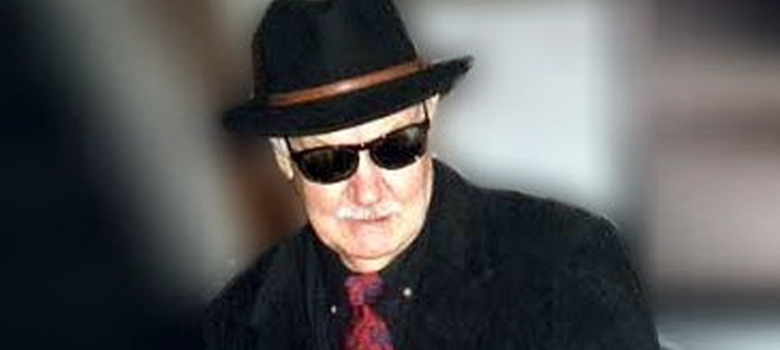
- His friend, prankster / huckster and fellow citizen ufologist Gray Barker, would capitalize on the “Men in Black” phenomenon with his legendary tome They Knew Too Much About Flying Saucers.[↩]
- Objectively speaking, Keel did interview several eyewitnesses for his works who claimed to have seen the Mothman and other supernatural phenomena firsthand. These paranormal experiencers honestly believed in the phenomena he investigated. That’s a lot of work to undertake for hokum.[↩]
